
Exploring the realm of natural mental health improvement, this article delves into various strategies and techniques that can positively impact your well-being. From lifestyle choices to stress management, discover holistic approaches to enhance your mental health naturally.
In the following paragraphs, we will delve deeper into the factors affecting mental health, natural strategies for improvement, the connection between physical and mental health, social support's role, and effective stress management techniques.
Factors Affecting Mental Health
Various factors can impact mental health, influencing overall well-being and quality of life. Lifestyle choices, environmental factors, and genetic predispositions all play a role in shaping an individual's mental health.
Lifestyle Choices
Lifestyle choices have a significant impact on mental well-being. Engaging in regular physical activity, maintaining a balanced diet, getting enough sleep, and practicing stress management techniques can all contribute to better mental health.
Environmental Factors
Environmental factors can also affect mental health. Living in a safe and supportive community, having access to quality healthcare and social services, and experiencing minimal exposure to violence or trauma can promote positive mental well-being.
Natural Strategies for Improving Mental Health
Regularly incorporating natural methods into your daily routine can significantly enhance your mental well-being. These strategies focus on holistic approaches that promote a healthy mind and body.
Exercise
Regular physical activity is not only beneficial for your physical health but also plays a crucial role in improving mental well-being. Exercise helps reduce stress, anxiety, and depression by releasing endorphins, also known as the "feel-good" hormones. Whether it's going for a run, practicing yoga, or simply taking a brisk walk, staying active can positively impact your mental health.
Diet
Maintaining a balanced and nutritious diet is essential for overall health, including mental well-being. Foods rich in omega-3 fatty acids, vitamins, and minerals can help boost brain function and mood. Consuming a variety of fruits, vegetables, whole grains, and lean proteins can provide the necessary nutrients to support your mental health.
Sleep
Quality sleep is vital for cognitive function and emotional well-being. Lack of sleep can lead to irritability, mood swings, and difficulty concentrating. Establishing a consistent sleep routine, creating a relaxing bedtime environment, and practicing good sleep hygiene can improve the quality of your sleep and contribute to better mental health.
Mindfulness and Meditation
Practicing mindfulness and meditation techniques can help reduce stress, increase self-awareness, and promote emotional balance. Mindfulness involves focusing on the present moment without judgment, while meditation encourages relaxation and mental clarity. Incorporating these practices into your daily routine can enhance your mental well-being.
Spending Time in Nature
Connecting with nature has been shown to have a positive impact on mental health. Spending time outdoors, whether it's going for a hike, gardening, or simply sitting in a park, can reduce stress, boost mood, and improve overall well-being. Nature provides a calming environment that allows for relaxation and rejuvenation of the mind.
The Connection Between Physical Health and Mental Health
Physical health and mental health are closely interconnected, with each one influencing the other. When our physical health is in good condition, it can have a positive impact on our mental well-being, and vice versa. Let's explore the relationship between physical health and mental health in more detail.
Impact of Regular Physical Activity on Mental Well-being
Regular physical activity plays a crucial role in maintaining good mental health. Exercise releases endorphins, also known as "feel-good" hormones, which can help reduce feelings of stress, anxiety, and depression. Physical activity has been linked to improved mood, increased self-esteem, and better overall mental well-being.
Whether it's going for a walk, jogging, or engaging in a workout routine, staying active can significantly benefit your mental health.
Balanced Diet and Overall Mental Health
Maintaining a balanced diet is essential for both physical and mental health. Certain nutrients, such as omega-3 fatty acids, B vitamins, and antioxidants, have been associated with improved mental well-being. A diet rich in fruits, vegetables, whole grains, lean proteins, and healthy fats can provide the necessary nutrients to support brain function and emotional health.
Eating well-balanced meals can help regulate mood, enhance cognitive function, and contribute to overall mental wellness.
Social Support and Mental Health
Social connections play a crucial role in maintaining good mental health
The Importance of Social Connections
Building and nurturing healthy relationships with friends, family, and community members can provide emotional support, reduce feelings of loneliness, and offer a sense of belonging. These connections can help individuals cope with stress, anxiety, and depression, leading to better mental health outcomes.
Ways to Build a Strong Support Network
- Join clubs or community groups that share your interests to meet like-minded individuals.
- Stay in touch with friends and family regularly through calls, messages, or in-person interactions.
- Seek out professional support through therapy or counseling if needed.
- Volunteer or participate in activities that allow you to connect with others and give back to the community.
The Influence of Healthy Relationships
Healthy relationships based on trust, respect, and communication can contribute to improved mental health by providing a sense of security and emotional stability. These relationships can foster positive emotions, enhance self-esteem, and promote overall well-being.
Stress Management Techniques
Stress is a common experience in today's fast-paced world and can have a significant impact on mental well-being. Effective stress management techniques are crucial for maintaining good mental health and overall well-being. In this section, we will explore strategies for managing stress effectively and enhancing mental health.
Impact of Stress on Mental Well-being
Stress can negatively affect mental health by leading to symptoms such as anxiety, depression, and mood swings. Prolonged stress can also increase the risk of developing mental health disorders such as PTSD or burnout. It is essential to address stress promptly to prevent its detrimental effects on mental well-being.
Benefits of Relaxation Techniques
- Deep Breathing: Practicing deep breathing exercises can help calm the mind and body, reducing stress and anxiety levels. By focusing on deep, slow breaths, individuals can activate the body's relaxation response and promote a sense of calmness.
- Yoga: Yoga combines physical postures, breathing techniques, and meditation to promote relaxation and reduce stress. Regular practice of yoga can improve flexibility, strength, and mental clarity, leading to better overall mental health.
- Mindfulness Meditation: Mindfulness meditation involves focusing on the present moment without judgment, allowing individuals to cultivate awareness and reduce stress. By practicing mindfulness, individuals can enhance their mental well-being and cope better with life's challenges.
- Progressive Muscle Relaxation: This technique involves tensing and relaxing different muscle groups in the body to release physical tension and promote relaxation. Progressive muscle relaxation can help reduce stress levels and improve overall mental health.
Closure
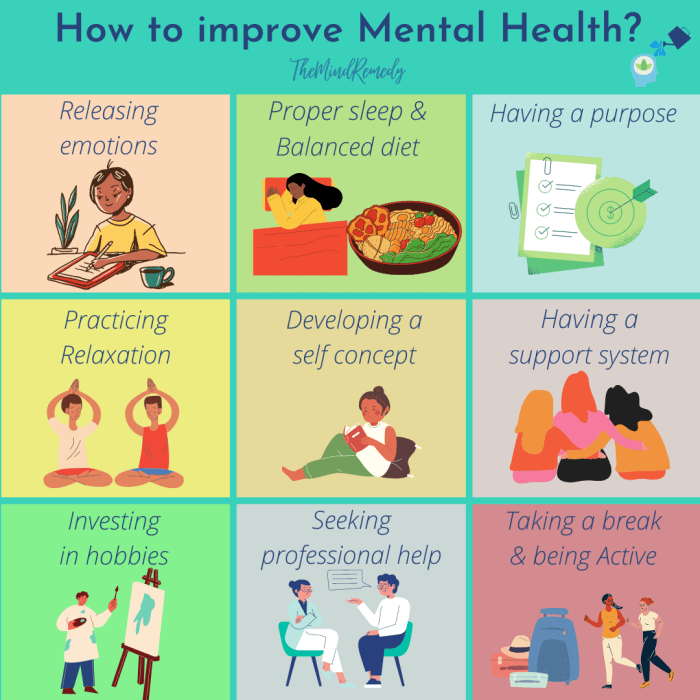
In conclusion, prioritizing your mental health through natural means can lead to a more balanced and fulfilling life. By incorporating these practices into your routine, you take significant steps towards improved overall well-being.
Expert Answers
How often should I exercise to improve my mental health?
Regular exercise, at least 3-4 times a week, is beneficial for enhancing mental well-being. Find activities you enjoy to make it a sustainable practice.
Can diet really affect my mental health?
Absolutely. A balanced diet rich in nutrients like omega-3 fatty acids, fruits, vegetables, and whole grains can positively impact your mental health.
What is the role of mindfulness in improving mental health?
Mindfulness practices, such as meditation and deep breathing, help in reducing stress, increasing self-awareness, and promoting overall mental well-being.
How important are social connections for mental health?
Building and maintaining strong social connections is crucial for good mental health. It provides emotional support, reduces feelings of isolation, and enhances overall well-being.
What are effective stress management techniques?
Effective stress management techniques include deep breathing exercises, yoga, mindfulness meditation, and engaging in hobbies or activities you enjoy.


![How to Cancel CarShield [Explained]](https://health.radartasik.id/wp-content/uploads/2025/11/Carshield-Vs-Endurance-120x86.png)